The 4-layer Geo-Neural Layer explained
What each layer does, why we split them, and how versioning works across instruments, governments, companies, and actors.
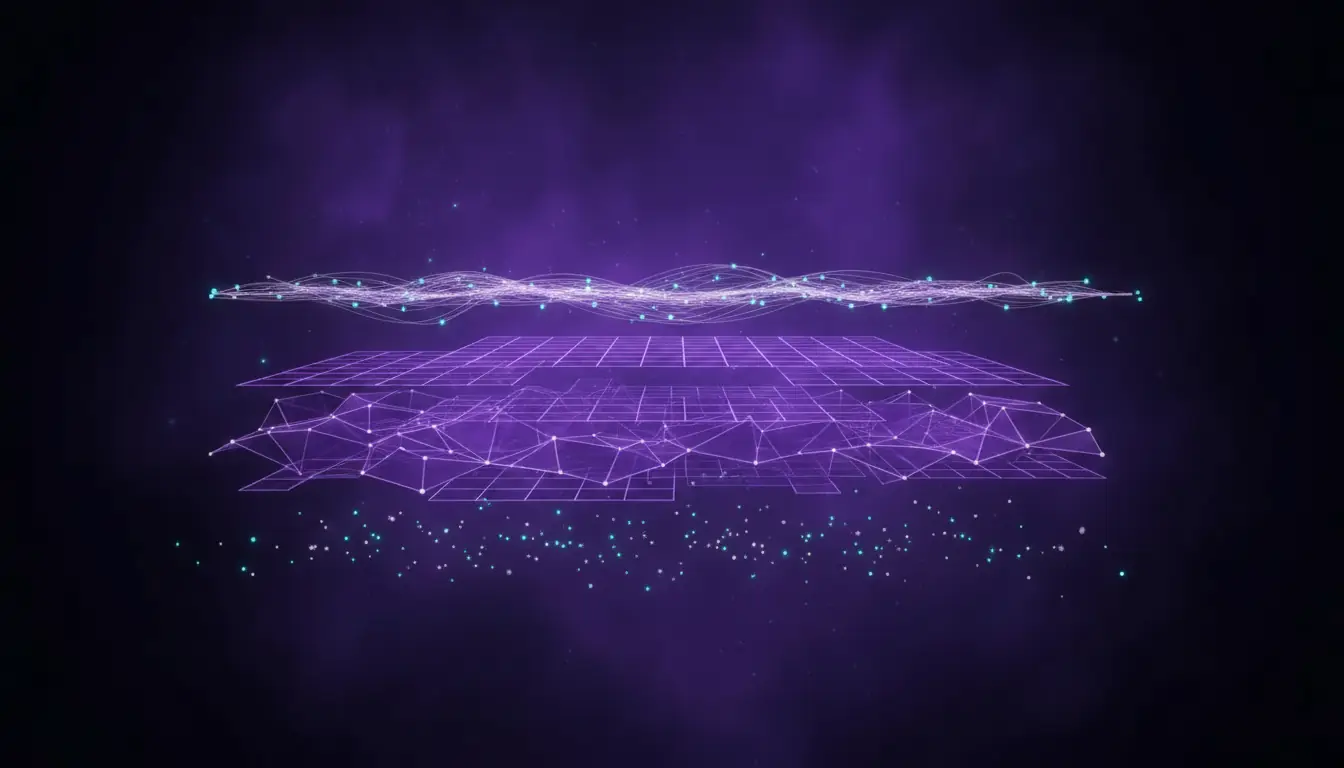
A world model that puts a bond, the central bank that issued it, the bank that holds it, and the trader who moved it into one typed graph — and versions every node.
Most "world models" in AI are a single flat namespace of entities with a bag of relations. They answer "what do you know about X?" They do not answer "what changed in the substrate that made X move?" — because they never separated the layers that explain a move from the thing that moved. The Geo-Neural Layer (GNL) is built to answer the second question.
Four layers, one typed graph
The GNL is a versioned, typed graph split into four layers, each a different kind of entity with a different kind of change: L1 Instruments (financial objects), L2 Governments (policies and regimes), L3 Companies (organizations), L4 Actors (people, from public signals only). The split is not cosmetic. A layer changes at a characteristic rate and for characteristic reasons, and the versioning rules are different for each.
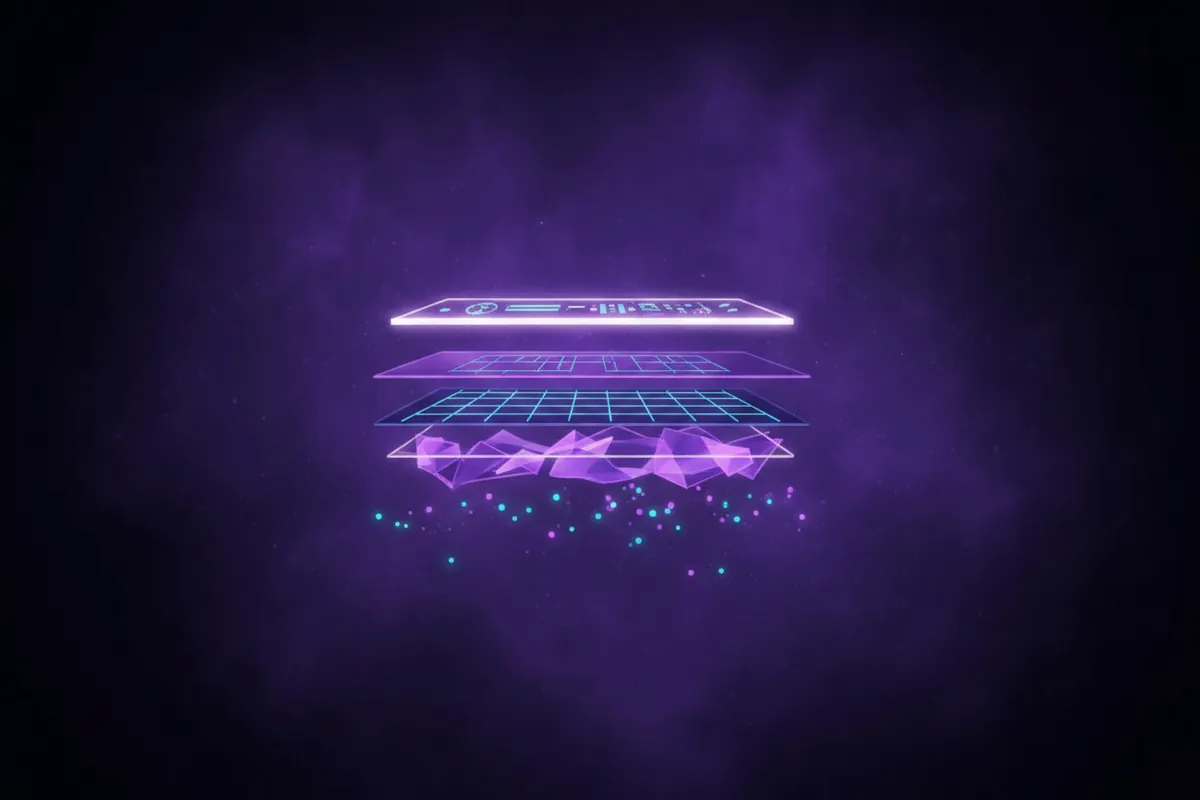
- L1 Instruments — bonds, rates, contracts. Versioned when terms change; mostly slow, occasionally discontinuous.
- L2 Governments — policies, regulators, regimes. Versioned on action; the layer most likely to move every other layer at once.
- L3 Companies — organizations, holdings, exposure. Versioned on filings and material events.
- L4 Actors — people, from public signals only. Versioned on the record; the strictest governance, by design.
Why split them
A single flat model cannot distinguish "the bond repriced because the central bank hiked" from "the bond repriced because the holder sold." Both are edges to the same node. The four-layer split makes the cause a first-class, typed, versioned thing: the hike is an L2 NodeVersion, the sale is an L3/L4 event, and the bond’s new price is an L1 NodeVersion that references both. A query over the graph can now ask which layer drove which.
A flat model knows that things moved. A layered model knows which layer made them move — and that is the difference between a feed and an explanation.
Versioning: append-only, hash-chained
Every node carries versions. A version is immutable; change creates a new NodeVersion that links to the previous. The chain is hash-linked (BR-842), so the state of the world at any past moment is reconstructable bit-for-bit — which is what makes the manifest attest reproducibility rather than wish for it. Bounded awakening keeps per-query cost flat as the graph grows: a query awakens a budgeted neighborhood across the four layers, not the whole world.
The GNL is not a database of facts. It is a versioned record of how the facts changed, and that record is what an auditor — or a citizen, eventually — can replay.
— GNL design note
What it is not
The GNL does not certify that any node is true. It certifies provenance: which version of which layer produced an output, and that the computation over those versions is reproducible. Accuracy is a calibration loop in progress (Brier via deino-eval, gated by Gate 1b). The world model is the substrate; the truth of the world is yours to verify. We are building the POC — pre-revenue — and these layers are built but inert until calibration fills them.